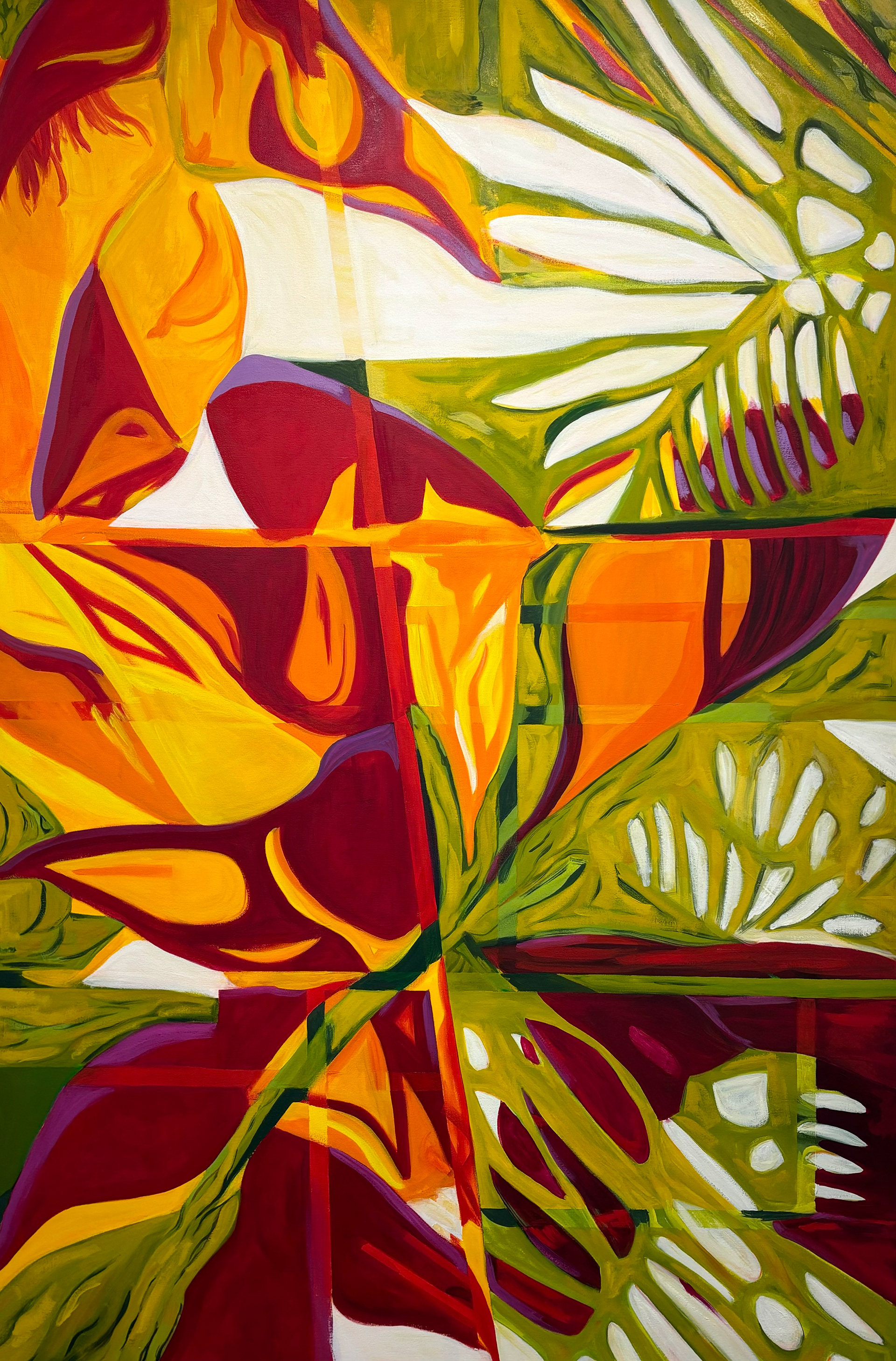
Terrarium I
Oil and Acrylic on Canvas
72" x 48"
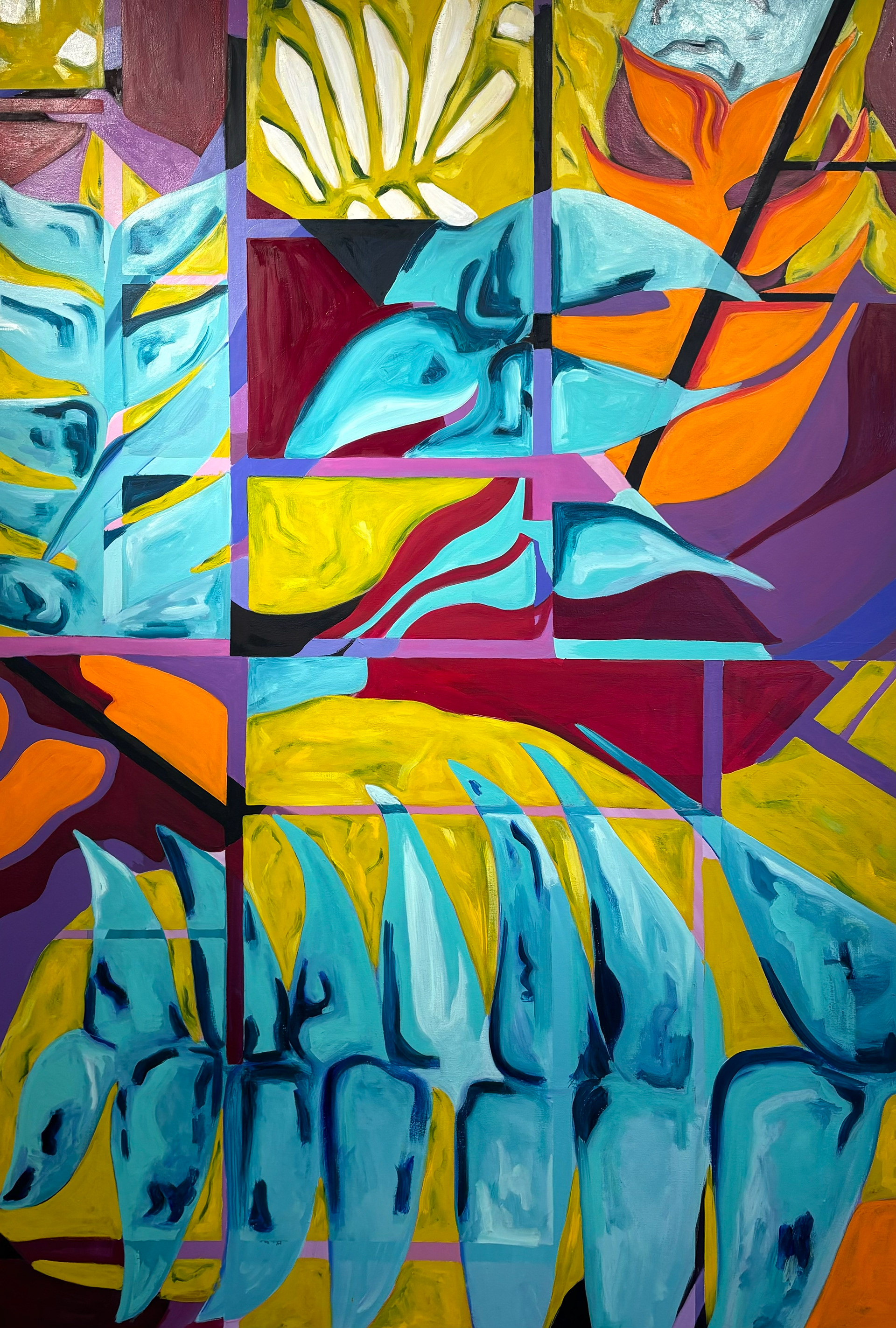
Terrarium II
Oil and Acrylic on Canvas
72" x 48"
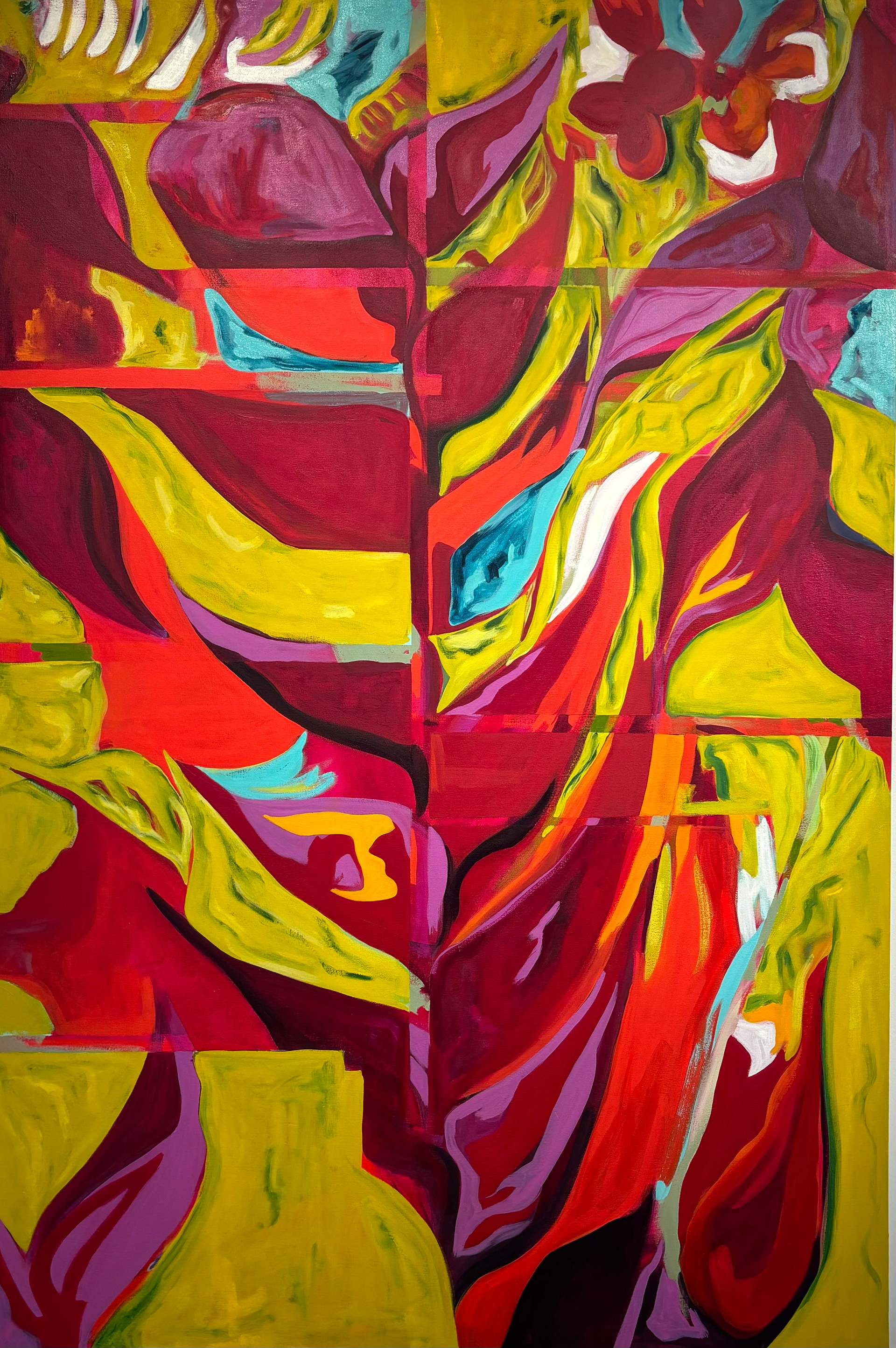
Terrarium III
Oil and Acrylic on Canvas
72" x 48"
My series, Terrarium, explores the tension between humans and the environment through large, abstracted oil paintings. I spent the majority of my childhood growing up in Hawaii, learning about sustainable and indigenous farming methods that work in harmony with the land. When I moved to Oklahoma, I noticed a different cultural relationship to the environment. Here, and in much of the United States, nature is seen as a material to be used and controlled rather than something we belong to. Visually, I am interested in the contrast between organic systems found naturally in the environment and man-made systems that make up our industrialized world. Man-made systems such as cities, industrialized farming methods, or transportation systems tend to be more structured, linear, and grid-like. Nature tends to be organic, fluid, and unpredictable. My work captures the tension between the two systems by depicting botanical forms being constrained and disrupted in some parts, and in other parts, pushing back. These paintings are meant to be an example of how we may temporarily dominate and reshape the land; however, nature is never passive. The main plant featured in my series is the heliconia, also known as the lobster claw plant. This plant is very common in Hawaii; however, it is not native there and was introduced by humans for its decorative quality. I titled this series Terrarium because a terrarium is a controlled version of nature. Something living is placed inside a contained, artificial structure, meant to simulate its original environment.